

There are seasons in life when we feel exposed.
This is more than just a moment of difficulty; seemingly, all joy and life have been stripped bare. The plans you trusted are gone. Your expectations from life are out of reach. The supports you leaned on don’t seem stable. The things that once gave comfort don’t carry the same weight of safety anymore.
Sometimes it is by our own doing, sometimes by the trespass of others, and sometimes it might even be a learning moment initiated by God.
There is a word for such moments: wilderness.
We don’t choose wilderness moments. We don’t enjoy them. And if we’re honest, we often try to escape them as quickly as possible. We have all prayed the “God, get me out of this,” prayer. However, the biblical story suggests something different for wilderness moments—these are not just “trying” seasons to endure. They are places where something deeper is revealed. These wilderness moments are seasons in which we learn to trust and that we are shaped.
And often, what is revealed in wilderness moments is us, our true selves underneath the imposter and false identities.
The Honesty of the Wilderness
Wilderness seasons have a way of telling the truth.
They expose what we rely on. They surface what we’ve ignored. They reveal how much of our lives are built on control, comfort, or self-direction. The anxieties, the self-coping mechanisms. The insecurities. These are all expressions of our deepest-held beliefs.
This is why they feel so disoriented in our wilderness moments.
In more stable seasons, it’s possible to manage appearances—spiritually, emotionally, even relationally. We can push on. Yet, when we are walking through the wilderness, wishing we were back in “Egypt,” we find that there’s less to hide behind. The noise quiets. The distractions thin out. What remains is more honest.
Believe it or not, this is why God allows wilderness moments, in my opinion.
This is also why these moments are so significant.
They are not only seasons of struggle. They are moments of clarity.
This reality should change how we see these moments.
More Than Survival
Most of us approach difficult seasons with a simple goal: get through it.
I have no less than five situations in my life right now where the lure is to do “just get through it,” and right now that wins more days than not.
In wilderness moments, we pray for relief. We look for solutions. We try to regain stability as quickly as possible. There’s nothing inherently wrong with that. We are taught to pray for God’s deliverance. However, when all we do is pray like this, with our eyes closed, we can miss something important.
We need to learn to pray with our eyes open.
In the scriptures, the wilderness is not just something to survive—it’s something that forms us.
Again and again, God meets people there. Israel in the desert. Elijah in isolation. Jesus in the wilderness of temptation. The wilderness becomes a place where dependence is deepened, and priorities are realigned.
Which raises a different kind of question.
Not just “How do I get out of this?” but “What is being revealed in me right now?”
In the wilderness, we see Jesus truly is who he said he is. Where all of humanity had failed, he was revealed. Jesus’ dependence on the Father prevented a time of trial and testing from becoming temptation. This is why Jesus didn’t get “tripped up” in the wilderness moments.
Wilderness moments are a place to not be dependent on bread alone, yet we always think it is bread that will give us what we need.
Wilderness moments also call us to “repent” from the places we have become misaligned and disconnected. To confess the places God is showing us who we have become. It is a chance to come face-to-face with God and ourselves in a surrendering way.
Why Repentance Is So Difficult
Wilderness moments bring repentance into play.
And if we’re honest, repentance is often harder than the struggle itself.
Struggle can be external. Repentance is internal.
Repentance requires us to face things we would rather avoid—our misaligned desires, our self-centered habits, the ways we resist God’s direction. It calls for a kind of honesty that is uncomfortable.
We come face to face with our empires, false identities, and weaknesses.
It means acknowledging, at times, “I contributed to this.” Or at least, “I am not as aligned with God as I thought.”
In our best Steve Urkel voice, we say, “Did I do that?”
That level of self-awareness is not easy.
But it is necessary.
Repentance is an act of realignment, and it can be deeply discomforting.
A Different Understanding of Repentance
Repentance is often misunderstood.
That is because we haven’t always seen true repentance practiced well.
For so often, in news headlines and pulpits across America, repentance is reduced to feeling bad, saying sorry, or trying harder. But biblically, it is something deeper and more comprehensive. It is a reorientation of the whole person.
Repentance is a turning.
Repentance is a turning, not just away from sin, but toward God.
Jesus begins his ministry with a simple but weighty invitation: “Repent, for the kingdom of heaven has come near” (Matthew 4:17).
This is not a one-time moment. It is an ongoing posture. A continual re-centering of life around the presence, rule and reign of God.
It is choosing his goodness and good news over the “good” the world offers.
Repentance is less about punishment and more about alignment.
If we understood it rightly and practiced it regularly, it would not be the embarrassing feeling it so often is.
“Rend Your Hearts”
The prophet Joel gives one of the clearest pictures of repentance.
Speaking to a people whose lives had been devastated—literally stripped bare by a locust plague—he calls them back to God with these words: “Rend your heart and not your garments.”
In other words, don’t settle for outward displays. Don’t reduce this to performance or ritual. Let something deeper be torn open.
In the ancient world, tearing garments was a visible sign of grief or repentance. Joel says it isn’t enough.
God is not after appearances. God is after the heart.
The place of thought, desire, will, and identity.
True repentance reaches that level.
In the wilderness, we practice Repentance, rendering our hearts.
The Kindness of God
For the past few weeks, I have been wrestling with Joel’s message. For me, what’s striking about Joel’s message is not just the call to repentance, but the reason for it.
“Return to the Lord your God, for he is gracious and compassionate, slow to anger and abounding in love…” (Joel 2:13).
This reframes the why behind repentance.
Repentance is not about appeasing an angry God. It is about returning to a good one.
It is not driven by fear, but by trust in God’s character.
This is consistent across Scripture. Paul echoes it when he writes that God’s kindness leads us to repentance. The invitation is not coercive—it is relational.
God is not trying to push people away through judgment. He is drawing them back through grace.
What Repentance Looks Like Now
So what does this mean in a wilderness season?
It means we stop avoiding what is being revealed.
We pay attention to what is surfacing—our anxieties, our habits, our attachments, our resistance. And instead of numbing or distracting ourselves, we bring those things honestly before God.
Repentance becomes less about a single act and more about a way of living. It is an imperative for our lives. It is an ongoing reality.
In the wilderness, repetance is a willingness to continually turn.
Repetition of repentance becomes a consistent re-examining of our priorities.
We let go of what is not aligned.
We return, again and again, to the center.
Repentance drives us back to honesty with God and ourselves.
The Way Back Is Still Open
Wilderness seasons, because of the way we feel like they are stripped from us, can feel like an ending.
But in Scripture, I think they are often the beginnings of new things, new life, and new purposes God wants to bring about in us.
Wilderness moments strip away what is unnecessary so that something truer can take root. They expose what is misaligned so that it can be reoriented. They bring us to the end of ourselves so that we can rediscover dependence on God.
Repentance is the pathway through that process.
Repentance is an invitation.
The way back is not complicated. It is not reserved for the spiritually elite. It is not dependent on having everything figured out.
It begins with a simple turning.
A willingness to come back to God as he actually is—gracious, compassionate, patient, and full of love.
And in that returning, we often find that the wilderness was not the absence of God after all.
It was the place where he was waiting.
Final Thoughts
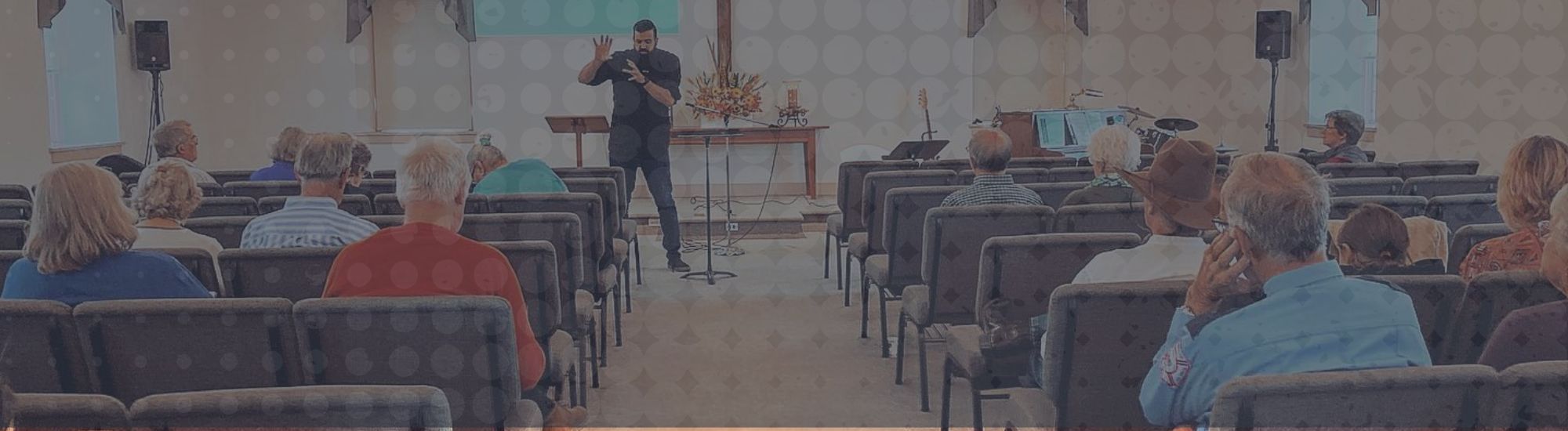
I talk a little more about Joel and this Rend Your Heart passage on my Lead a Quiet Life Blog Post on Patheos. I hope you will check it out. This reflection emerged from a shared Lenten series across three New Danville District churches within the LMC Network of Churches: Byerland Mennonite Church, New Danville Mennonite Church, and River Corner Church. Together, we are walking the way of the cross—exploring surrender, repentance, and hope as we move toward Resurrection Sunday (Easter) and the promise of resurrection.
Thanks for stopping by. I am Jeff McLain, and I write about the Quiet Way—a life shaped by the Lord’s Prayer, spiritual disciplines, and sustaining habits. Much of my work explores theology at the intersections of everyday life and the invitation of the scriptures to lead a quiet life. If this post encouraged you, consider sharing it with a friend, leaving a thought in the comments, or subscribing so you don’t miss future reflections. You can also find more of my writing at the Lead a Quiet Life blog on Patheos, and you can listen to the Discovering God Podcast, where we explore the scriptures and the life of faith together. I genuinely enjoy conversation. If something here resonated with you, feel free to reach out by email or connect with me on Facebook or Instagram.
Discover more from Jeff McLain
Subscribe to get the latest posts sent to your email.
